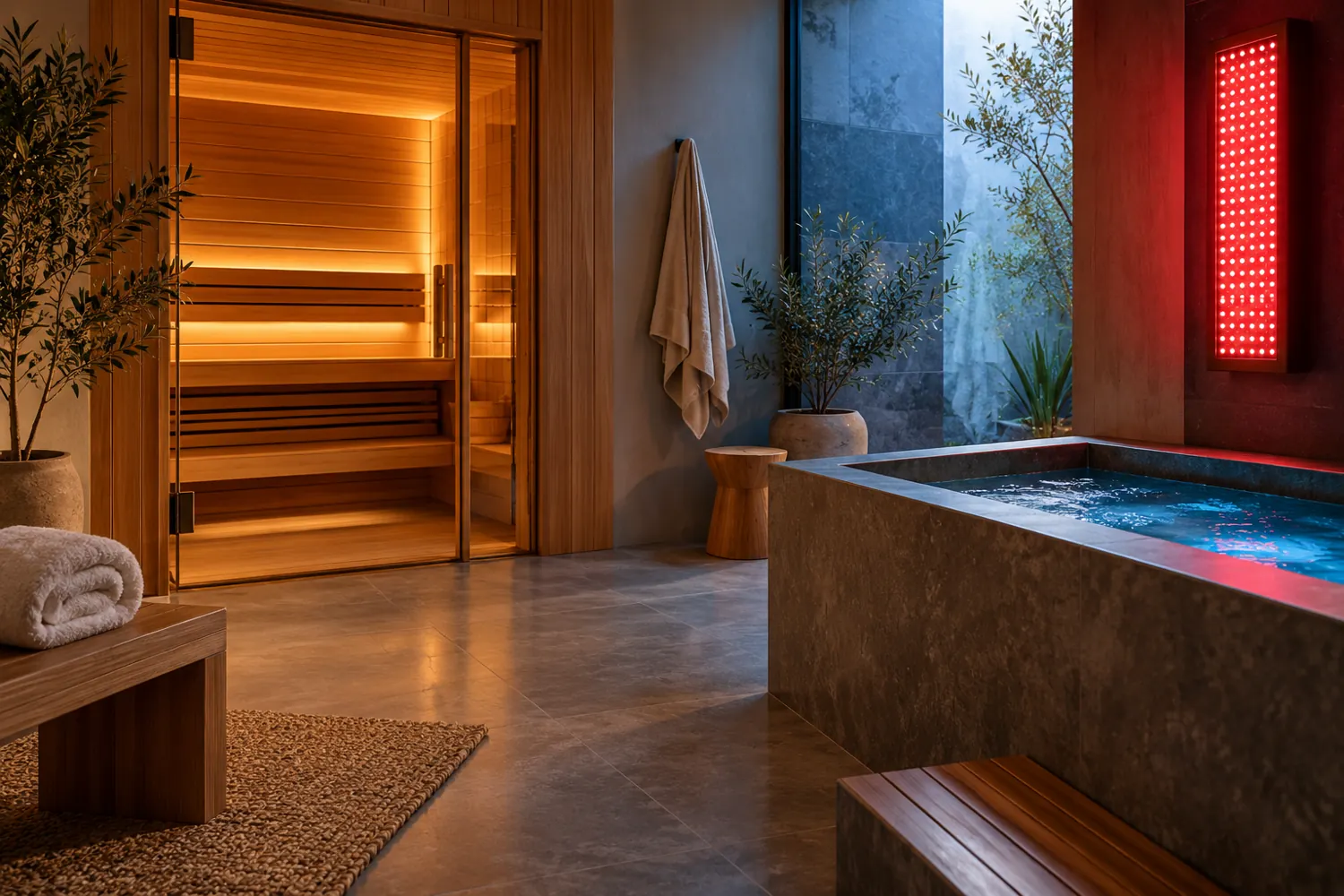
These practices are often sold together, but each has a different evidence base. A pleasant routine is a valid reason to explore one; it is not proof of a disease-prevention effect.
Red light
Photobiomodulation is being studied for skin and recovery outcomes. Devices differ in wavelength, power and distance, so a result from one protocol does not validate every home panel. Be cautious of broad claims about hormones, whole-body regeneration or guaranteed results.
Sauna
Long-running cohort studies have found associations between frequent sauna use and lower cardiovascular mortality. Association is not proof that sauna caused the difference. Heat can also be demanding, especially for people with certain cardiovascular conditions.
Cold water
Cold immersion may help perceived soreness after strenuous exercise. Regular cold immersion immediately after strength sessions may reduce some training adaptations. Studies use different water temperatures and durations, so there is no single evidence-based beginner protocol for everyone.
If you are considering intense heat or cold exposure, begin conservatively and seek medical advice if you have a heart condition, are pregnant or take medication affecting blood pressure. Stop if you feel faint or unwell.
Three practices, three kinds of evidence
A home panel, a hot room and a cold tub can make an attractive ritual. They should not be sold as one scientifically proven package. Studies ask different questions, use different protocols and measure different outcomes. A useful review starts by matching the claim on the box to the outcome actually studied.
For red light, check the wavelength, treatment area, distance and duration before comparing a device with a trial. Home devices may be convenient, but a technical specification is not proof of a clinical result. Eye protection and the maker's safety instructions matter. We would be especially sceptical of sweeping claims that one panel can treat unrelated conditions.
For sauna, observational studies can reveal patterns over time, but people who use saunas frequently may differ in many other ways from those who do not. Heat can feel restorative; that experience is real even when a lifespan claim is unproven. Access, comfort, hydration and a safe place to cool down are more useful first considerations than chasing a number from a headline.
For cold water, the question is often recovery after exercise. Perceived soreness and long term training adaptation are not the same outcome. If building strength is the priority, the timing of regular immersion after lifting deserves particular attention. An abrupt plunge can cause a strong breathing and cardiovascular response; a viral challenge is a poor guide to an individual starting point.
A calmer way to explore them
Pick one practice and decide what you want from it: a pleasant routine, a recovery experiment or a specific outcome worth discussing with a professional. Start with a conservative exposure, follow equipment instructions, and stop when you feel dizzy or unwell. For heat and cold, avoid doing it alone if there is any concern about fainting or a medical condition.
When shopping for a device or venue, assess transparent specifications, safety guidance, local support and return terms. A spectacular testimonial is not a substitute for those basics. We will keep device recommendations separate from the evidence review so commercial relationships do not change the science.
Sources
- Prospective sauna cohort study
- Cold-water immersion and resistance training adaptations
- Cold-water immersion recovery review
Educational information only. Research and regulatory status may change. Speak with a qualified clinician about individual health decisions. How we assess products and partnerships.