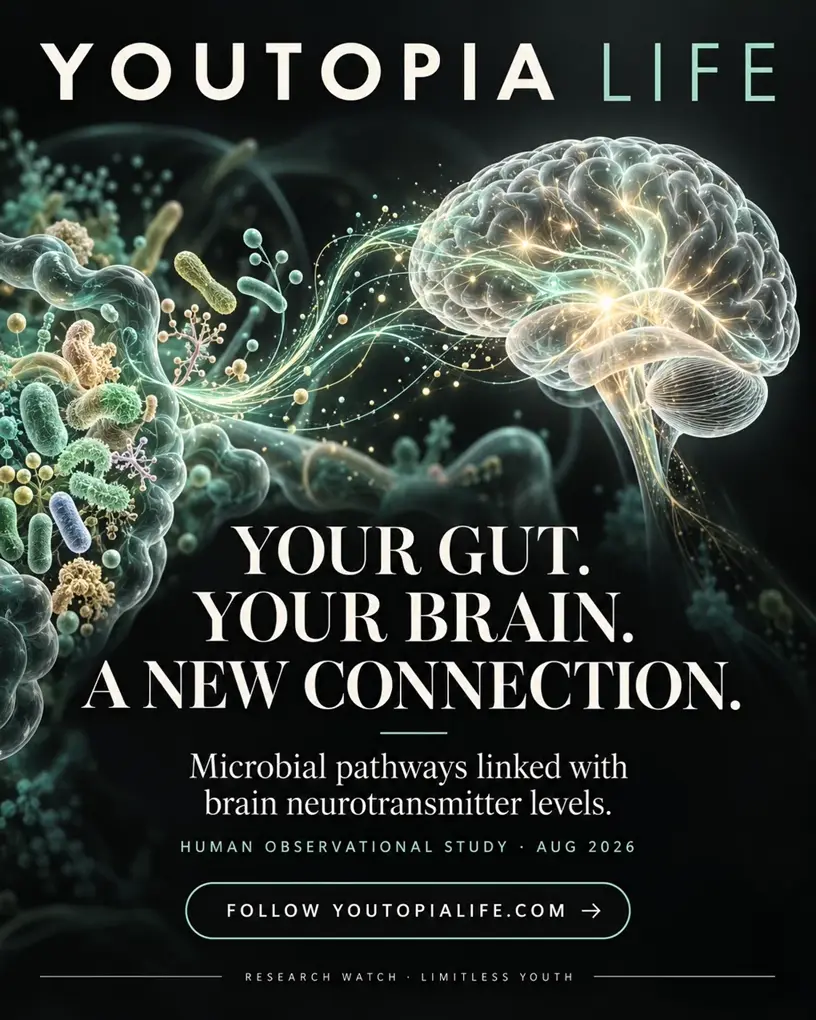
The gut–brain axis is an arresting phrase because it brings together two parts of life that feel deeply personal: what happens in the digestive system and how the mind feels. The newer human research makes that conversation more concrete. It also shows why the distinction between a connection and a cause matters.
The advance is in the pairing
This study brought microbial genetic information and regional brain chemistry into the same investigation. It examined baseline observations in healthy young women, linking microbial functional potential with spectroscopy-based estimates of GABA and glutamate. The microbial data describe genes that could support a pathway; they do not directly measure the amount of a chemical travelling from gut to brain.
That is an important boundary. The work is a human association study, not evidence that a particular probiotic or diet changed brain chemistry. Its selected population also limits how readily the result can be generalised.
A different way to read a microbiome headline
Our interpretation is that the interesting shift is from naming bacteria to asking what microbial communities may be capable of doing. This creates a more specific research question. It does not mean a consumer stool result can tell someone how their brain is functioning, or that a single species should be treated as a dial for mood.
Imagine two people with similar microbial profiles. Their wider circumstances may still differ in many ways. The observation of a relationship gives investigators a place to look; it does not isolate which part of the system produced it. That is why a clear experiment matters more than a vivid diagram of arrows between organs.
What would move the story forward?
A useful next stage would deliberately change a defined intervention and test a prespecified outcome against a credible comparison. Investigators would need to show that the microbial change occurred, that the brain-related measurement changed in a consistent way, and that the interpretation survived alternative explanations.
Even then, a laboratory measurement and a meaningful difference in someone's daily life would remain separate questions. We would want both the biological story and an honest account of how participants actually fared. An exciting mechanism can guide a trial without telling us in advance what the trial will find.
What this means for the reader
For now, the value is understanding the frontier, not constructing a brain-health shopping list. We see a reason to follow research that measures more than one side of the proposed connection. We do not see a basis in this paper for a personal mental-health treatment or a product recommendation.
The next strong headline will be earned by a better experiment. Until then, the precise story is already interesting: researchers can now ask more detailed human questions about two systems long discussed together.
Watch the short edition
A silent 12-second editorial reel; the written reporting carries the context and limitations.
Read beyond the headline.
Primary research, official guidance and supplier claims are identified in the linked titles and the reporting. The editorial-edition date records this rewrite, not a claim that every source has received a new clinical review.